
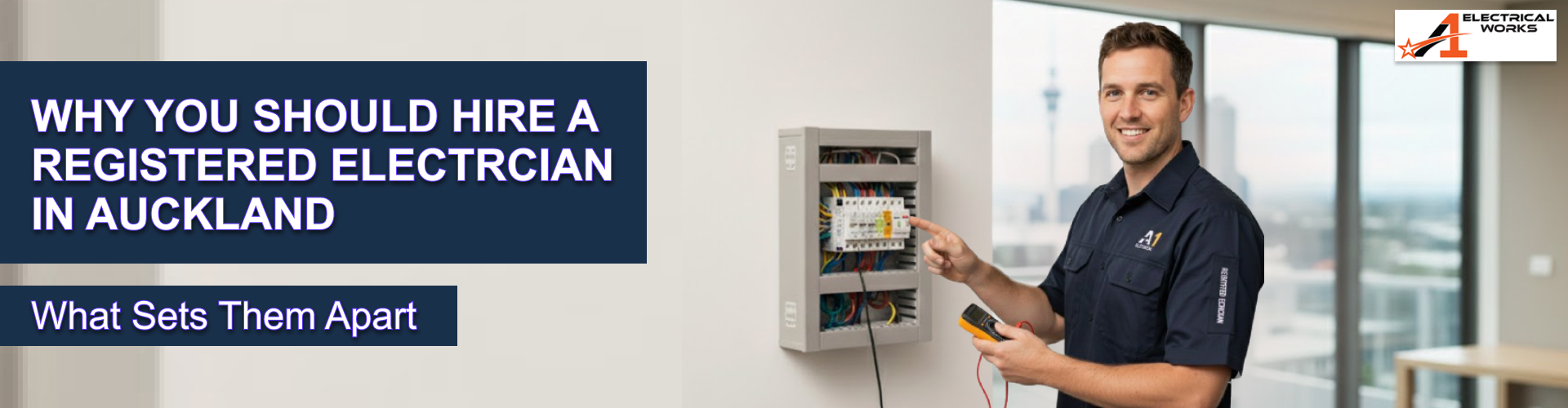
When it comes to electrical work in your home or workplace, there’s one decision that makes all the difference: choosing a properly registered, licensed professional rather than an unverified handyman. Live in Auckland and search for terms like “electrician near me”, “local electrician Auckland”, “best electrician Auckland”, or “commercial electrician Auckland”. You’ll find many options – but not all are equal. Hiring a registered electrician in Auckland isn’t just about convenience. It’s about safety, compliance, reliability and long-term value. In this post, we’ll explore what being “registered/licensed” really means, why it matters, when you definitely should hire one, and how to pick the right electrician for your needs.

What Does “Registered / Licensed Electrician Auckland” Mean?
In New Zealand (which includes Auckland), electrical work is strictly regulated by law. The Electrical Workers Registration Board (EWRB) sets the standards. To become a registered electrician, one must complete proper electrical theory and regulations coursework, pass written exams, undertake practical assessments, and complete required practical training and safety courses.
This licensing isn’t a minor formality — it establishes that the person has the knowledge, training, and skills to handle wiring, fixed installations, switchboards, safety devices, and all other aspects of electrical work to accepted legal and safety standards
The Risks of Hiring an Unlicensed or Amateur Electrician
Choosing someone cheaper or “convenient” but unlicensed might feel tempting — but the risks are substantial:
Safety Hazards
Without proper training and knowledge, wiring or installations may be done incorrectly. That increases the risk of short circuits, electrical shocks, house fires, or damage to appliances.
Poor Workmanship & Recurring Problems
Unqualified work often means substandard installations, which may fizzle for a while — and then problems like outages, flickering lights, or breakdowns surface. As many homeowners in Auckland have learned the hard way, these cheap fixes end up costing more long-term.
Legal and Insurance Issues
Under the regulations (Electricity (Safety) Regulations 2010 / Electricity Act 1992), only registered/licensed workers can perform prescribed electrical work for payment. If work is done illegally or without proper documentation (like a CoC), not only could you face legal consequences, but insurance coverage may also be void if damage arises from unlicensed work.
Lack of Accountability
Unlicensed individuals often don’t have liability insurance, nor are they bound by industry standards. If something goes wrong — say, wiring leads to fire — the homeowner is left bearing the full consequences.
Simply put: the short-term “savings” from hiring an unlicensed electrician nearly always translate into long-term risk, stress, and extra costs.
What a Registered / Licensed Electrician in Auckland Offers — Benefits & Services
Hiring a registered electrician — whether you need a local electrician in Auckland for a home repair or a commercial electrician for larger premises — provides peace of mind, safety, and long-term value. Here’s what you can expect from a qualified professional:
Safety & Compliance Assurance
A licensed electrician ensures installations are done according to New Zealand’s codes and safety regulations. After work, they issue a Certificate of Compliance (CoC) — a formal document that legally certifies the wiring or installation is safe and code-compliant.
Quality Workmanship & Expertise
Registered electricians are trained in wiring, fault-finding, switchboard work, earthing, power outlets and more. Whether you’re installing new lighting, rewiring, upgrading circuits, or doing complex commercial electrical setups, a professional’s experience is invaluable to ensure the job is done right. In addition, they follow professional standards during installation — reducing chances of future faults, ensuring load balancing, safety devices, earthing & grounding, and appropriate wiring for appliances/home requirements.
Long-Term Reliability and Cost-effectiveness
Although hiring a registered electrician might cost more upfront, it often saves money in the long run. Correct installations the first time around prevent recurring issues, reduce maintenance costs, and avoid expensive rework. Moreover, having proper documentation (CoC, compliance certificates) adds value — whether to safety, insurance, or when reselling the home. It gives you peace of mind knowing the electrical work is traceable, certifiable, and meets official standards.
Services for Different Needs — Residential and Commercial
Whether you look for “electrician near me” for home needs, or “commercial electrician Auckland” for business premises, a registered electrician covers a broad range:
- Residential services — rewiring, lighting installation, socket upgrades, maintenance, safety checks, switchboard upgrades.
- Commercial/Industrial services — structured wiring, heavier load circuits, complex installations, compliance for offices or business spaces. A licensed professional can handle the complexity and legal requirements that come with commercial jobs.
How to Find the Best Local Electrician in Auckland (And What to Check)
Since many electricians may show up in local searches, how do you pick the right one — the one who’s qualified, trustworthy and reliable?
- Use correct keywords — but verify credentials. Searching “electrician near me”, “local electrician Auckland”, “licensed electrician Auckland”, “best electrician Auckland” helps you find local service providers. But don’t stop there — always verify they are registered/licensed with the EWRB.
- Ask for their practising licence. The licence must be valid and current. The licence colour changes every two years (so check expiry).
- Request a Certificate of Compliance (CoC) for any fixed wiring or major installation. Without a CoC, you have no proof that the work meets safety standards.
- Check reviews or prior work (residential or commercial) to match your needs. For big jobs — especially commercial electrical work — confirm their experience in similar projects.
- Ask about insurance, workmanship guarantee, and safety inspections. Good electricians offer accountability — and after-job documentation.
When You Should Hire a Registered Electrician — Common Scenarios
Not every minor electrical job may necessitate a licensed electrician, but there are many situations where it’s strongly advisable — or legally necessary:
- New home build or renovation — wiring fresh circuits, installing switchboards, power outlets, lighting, or a full electrical layout.
- Major electrical installation — heavy load appliances, HVAC systems, electric ovens, or any installation requiring upgraded wiring/switchboards.
- Repairs or maintenance after issues — flickering lights, breaker trips, faulty wiring, old wiring upgrades, switching from old fuse boxes.
- Commercial setups or office premises — structured wiring, heavy electrical load, compliance for business regulations — especially needing a “commercial electrician Auckland”.
- Safety inspections before buying/selling property — older homes may have outdated wiring that doesn’t comply with current standards; a licensed electrician can inspect and provide proper safety documentation.
Frequently Asked Questions (FAQ)
Conclusion:
Why a Registered Electrician in Auckland Is Worth It When you hire a registered electrician in Auckland — instead of risking unlicensed or amateur workmanship — you are investing in safety, compliance, reliability, and long-term value. You get a professional who knows the law, follows standards, issues a Certificate of Compliance (CoC), and ensures that installations are done the first time correctly. Whether you need a simple home repair or a full commercial install, a licensed electrician offers peace of mind, legal compliance, and long-term savings by avoiding future hazards or expensive rework.
If you value safety and durability, calling a registered electrician is always the best choice.